
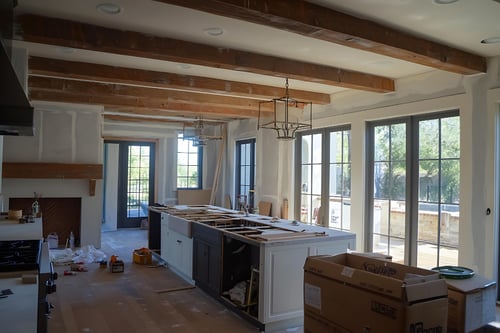
 Move or improve? That’s the dilemma facing many would-be homemovers, fuelled by a cost-of-living crisis, a departing PM and unease in the Middle East. Consumer confidence has been dented by everything happening globally and at home, and as the story always goes, people hold back on their moving plans until they feel more confident in the state of the economy. Transactions between January and April were down 10.3% year-on-year, according to HMRC, and sales agreed slipped by 4.1% between January and May, suggesting moving is not on the cards for many for the time being. When relocating is no longer an option, many people turn to improving their homes to enrich their current living situation.
The consensus, particularly in the capital, seems to be to stay put and focus attention on renovations. We carried out some research on behalf of our partner, Hillarys, on the current situation in London. We have observed a notable rise in withdrawn listings across the capital, with some months up around 25% year on year. These homeowners have taken moving home off the table. Inner London also saw a decline of 3.2% in instruction price, down £31,600 year on year. This means many potential London movers face listing their homes for sale for less than what they originally paid. Improving their home over relocating becomes a no-brainer when selling returns little bang for their buck.
If staying put - or plan B - is the chosen option, the homeowner decides to tackle everything that they dislike about their current home to make remaining in the property worthwhile and feel less like a consolation prize. Money earmarked for the move is suddenly reinvested into renovations and house updates. Whether that be overhauling the dated decor, a garden makeover or a furniture refresh. The would-be-mover-turned-improver’s reasons for moving still exist and must be put right. This could be a growing family needing an extra bedroom or a remote employee growing tired of working off the kitchen table. They may be considering extensions or room alterations. These households have now become a key target for SME retailers and home improvement services.
There’s more good news for SMEs in MyBuilder’s Renovation Nation Report 2026. It found that more than a quarter of British homeowners are more likely to spend money on renovations this year rather than attempt DIY. With kitchen fitting jobs being up 19%, and bathroom fitting jobs rising by 8% between 2024 and 2025, it looks like these will be the priority projects too.
There’s further opportunity coming from first-time buyers who, though keen to step on the property ladder, are unable to afford a flashy new property and must resign themselves to purchasing a doer-upper with a lower price tag. A survey by Nationwide Building Society found that 66% of first-time buyers chose to buy a more affordable home because it needed some DIY or renovation work. Not great for the FTB, but a goldmine for the SME retailer! The survey also found that these new homeowners are eager to tackle projects, with many planning to spend more than £2,500 on improvements and almost 30% ready to invest over £5,000. Their focus is mostly on sprucing up kitchens (48%) and bathrooms (49%), along with some larger structural upgrades (18%).
Those in older properties are also a key audience. Our data shows that people moving into homes built 20-25 years ago are 48% more likely to buy kitchens, bathrooms, and boilers than average.
In the latest Houzz report, 53% of those renovating were upgrading their tired 1940's houses, and 39% of homeowners had to undertake repairs last year. Heating systems, plumbing and electrics were the top systems that got replaced.
All of these point to huge opportunities for SMEs and how they should focus their attention on homeowners planning home improvement projects in 2026.
How do you get in front of these keen renovators?
We often talk about how SMEs should target homemovers who have sold their property or have just moved in, but as you can see, equally there’s value in going after those who have withdrawn their property from the market and those with older housing stock. Another point we touched on was to target those who have applied for planning permission.
Many home improvers will be putting in planning permission to extend or alter their current properties, and this is an audience SMEs should be going after.
Nearly 600,000 planning applications were submitted last year - a 0.58% increase on 2024 -and our data shows there was a circa 87% approval rate. This highlights the significant opportunity available to home improvement SME retailers.
Our research indicates that many of these applications involve households looking to change the space layout, create additional rooms or undertake repair or renovation projects, making them a valuable audience. We found that there were just over 500,000 mentions of keywords tied to requests for extra space (these include words such as: single story, extension, loft, dormer, bathroom, conservatory and two-story) across all applications.
We also found that there were around 130,000 references connected to restoration requests (these include words such as: gable, alterations, construction and flat roof). These homeowners are poised and ready to spend.
Which part of the country is being renovated the most?
To uncover where demand for home improvement is strongest, we examined planning application activity across the country. The South East emerged as the clear leader, with residents responsible for just under 20% of applications. This was followed by the East of England (around 13%), Inner London (just under 11%), and the South West (just over 10%). On the other hand, those in Northern Ireland only submitted 1% of applications.
One possible explanation for higher applications in the South East is the region’s elevated house prices. In many cases, extending a property allows homeowners to add significant value that can outweigh the costs associated with moving home.
What about those who didn’t get the green light for their projects?
We mentioned that about 600,000 applications were submitted, but not all were actually approved, so where does that leave those homeowners? They could be in limbo, waiting for the news (circa 33%), or they've changed their minds and withdrawn. Worse still, they've received the news that their plans have been rejected altogether. Unfortunately, this was the case for the 46,000 applications that were declined last year, meaning there will be homeowners living in properties they’re unhappy with. To make use of the space they already have, they may turn to buying new furniture that helps refresh their space or fits better. It would be worth targeting those who were declined with space-saving solutions.
As you can see, there’s ample opportunity for the savvy SME retailer. The homeowner of 2026 is eager to renovate. Are you getting in front of them right when they’re deciding what projects to tackle first?
If you are a tradesman or an independent retailer looking to connect with homeowners and support them on their home improvement journeys, let’s talk.