
A house move is the first domino in a spending spree. A mover spends big on furniture, furnishings, DIY and more.
Few customers have quite as much to spend on their home as someone who has just moved into one. For retailers and trades, this is gold.
Beyond the homemover, though, we have another interesting audience you may not have considered: the ‘failed homemover’ audience, for want of a better term. The would-be mover who listed with all the intention to move home and then, for whatever reason, has decided to withdraw their property from the market.
In Q3 2026, we reported on there being 205,987 properties withdrawn from the market. This means this audience represents c800k per year of UK residents. A property coming off the market could signal two very different opportunities for retailers.
A withdrawn property should not be written off as a lost opportunity. It could be the beginning of a new customer journey.
This homemover is at a crossroads. They may:
-
Stay put and spend money improving their home instead
-
Put their home back on the market after potentially making improvements to attract a buyer
Homeowners withdraw for various reasons. It could be that they cannot find the right property to buy, they are unable to secure an asking price they’re happy with, or their property attracted little interest. They’ve given moving a go; it hasn’t worked out, so plan B may be to improve the current home they live in to make it less of a consolation prize. For this group, they will require the services and goods of various trades or retailers across several categories:
- Home renovation: Homeowners may wish to maximise their existing footprints. They may require trades and professional services for extensions or conversions.
- Home improvements and DIY: Homeowners may wish to do their property up to make it more appealing to stay in.
- Homewares and soft furnishings: The withdrawn homeowner may spend money refreshing rooms or on lighting, textiles and decor to make an old space feel new.
These withdrawn property homeowners may need local contractors for extensions, structural changes, kitchen fit-outs, bathroom renovations and more. Sometimes the improvements market can be selecting higher-end finishes because they redirect all the spending from moving costs, stamp duty and agent fees into improving, opting for luxury kitchens and bathrooms, for instance.
For the second group of withdrawals, they may be rethinking their strategy on how to enhance their home to attract a buyer. They may decide that the property needs a little TLC before they relist in the hopes that this will attract buyers during round two on the market. This could be freshening up tired interiors, replacing worn flooring, updating a kitchen or bathroom, improving kerb appeal or decluttering and restyling rooms before photographs are taken for viewings.
Of course, not every seller will undertake improvements before relisting. Some will simply adjust their price or change agent, but there is the potential that a refreshed home is on the agenda.
What’s happening in the housing market right now
The housing market currently has more sellers and fewer buyers. Demand is down, currently 5.7% lower in year-to-date 2026 than 2025. Sales agreed have, in fact, been down now for five consecutive months. Yet supply of properties is up, 1.9% in year-to-date 2026 compared to 2025.
How do some sellers react when competition is rife? The ‘move or improve’ debate frequently tilts in the direction of ‘improving’ in these circumstances. This causes a shift in consumer behaviour.
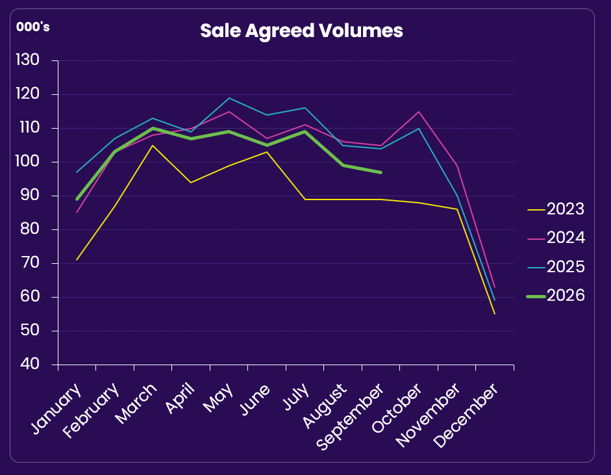
The improve market is looking promising for the retailer. And with mortgage rates rising and unfavourable selling prices, more people are being pushed into the ‘improve’ sector. Anglian Home Improvements data found that 26% of homeowners are more likely to renovate than relocate due to the current economic and geopolitical climate. This rises to 53% among 18- 34-year-olds. Those investing in their properties are prioritising their home’s appearance (72%) and comfort (75%).
A Houzz & Home Study Renovation Trends report found the median planned home improvement spend for 2026 is £10,000, with 57% planning to decorate or furnish, 46% planning renovations and 31% planning repairs.
There is also evidence that homeowners are continuing to invest in their properties for the long term. The 2026 UK Houzz and Home Study found that 49% of surveyed homeowners had renovated in 2025 while 60% had decorated or furnished their homes. Looking ahead, 46% planned to renovate in 2026, and 57% intended to decorate or furnish.
What’s more, research from Evolution Money found 61% would choose improving over moving. This is all evidence that the withdrawn market is a strong opportunity for the retailer. There are despondent would-be movers who have failed to move and now are set on doing up their current home.
For retailers, the message is clear: a homeowner who decides not to move may still have plenty of reasons to spend. In fact, the decision to stay could prompt them to tackle projects they had previously put off.
A withdrawn listing could therefore be a useful signal of a potential move from house hunting to home improving. While not every homeowner will renovate after withdrawal, identifying these households creates an opportunity to put relevant products in front of them.
Research from GetAgent in 2026 found 24% of surveyed homeowners who had intended to sell at the start of the year were no longer planning to move in the near future. A further 27% still intended to sell but were less certain about their plans. Of those reconsidering, 31% expected to return to the market later in the year and 29% planned to sell in 2027.
The findings highlight that a withdrawal from the market does not necessarily mean this ‘homemover’ audience is no longer valuable to the retailer.
Conclusion
Withdrawn listings are particularly interesting because they present two different opportunities. The first is the homeowners who may decide to remain in their current property but invest into it. The second is the seller who could be preparing to make their home more appealing to prospective buyers by doing it up before another attempt at the market.
If you’re still relying on broad advertising to reach people, you’re casting your net too wide. Most of this audience has no immediate plans to spend. Targeting the homemover through property data can help you identify households experiencing a change in circumstances that could create a reason to buy. We always talk about how valuable the mover is. The failed move can be just as lucrative. There's a potential customer sitting behind that withdrawn listing.